International Day of Forests 2026: Celebrating People, Partnerships, and Impact
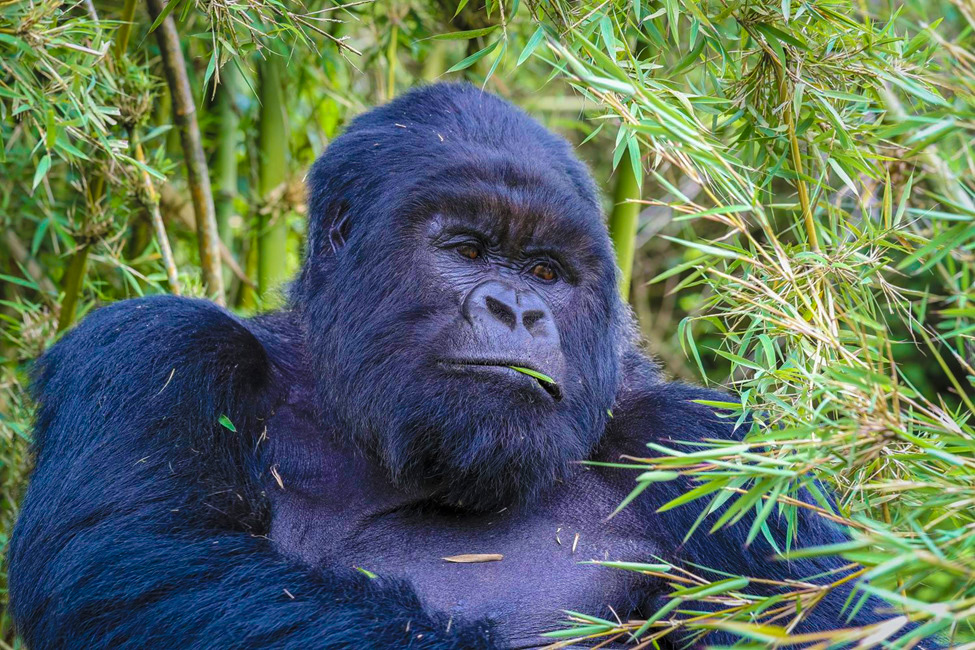
A mountain gorilla in Volcanoes National Park, Rwanda.
Every year on March 21, the world marks the International Day of Forests—a moment to recognize the vital role forests play in sustaining life on Earth. From regulating climate and protecting biodiversity to supporting livelihoods and economies, forests are foundational to a resilient future.
The 2026 theme highlights the importance of forests in building sustainable economies and strengthening community resilience. At the African Wildlife Foundation, this is not just a global message—it is a daily reality. Across Africa’s landscapes, AWF works alongside communities, governments, and partners to restore forests, protect ecosystems, and create lasting benefits for people.
This International Day of Forests, we celebrate the individuals and communities driving that impact on the ground.
Community Leadership Driving Forest Restoration in Kilombero
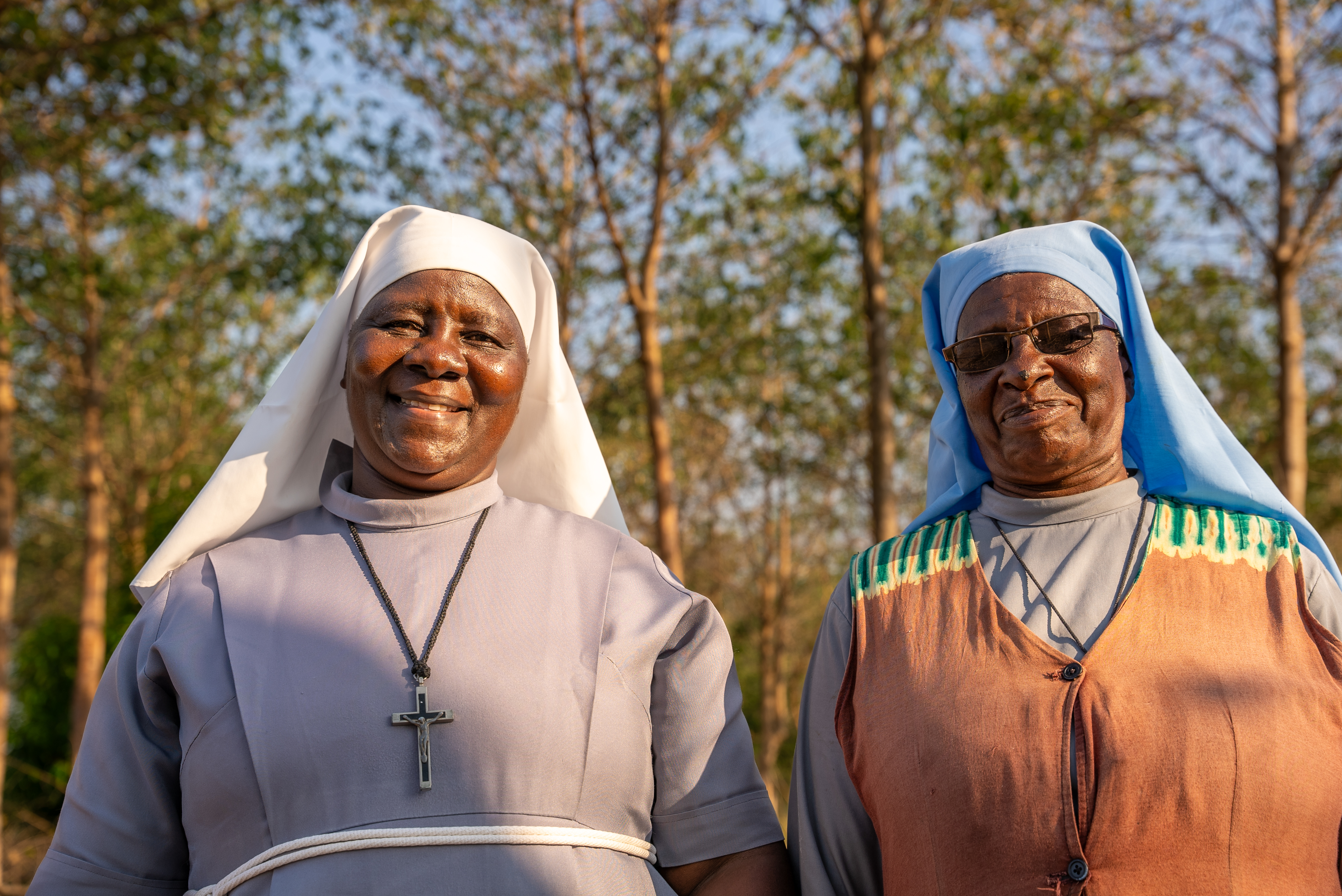
Sister Eusebia Punduka and Sister Narisisa Kilenga.
In Tanzania’s Kilombero Valley, forests sustain both people and wildlife—supporting water systems, agriculture, and biodiversity. Yet increasing pressure from agricultural expansion has made restoration more urgent than ever.
At the heart of the response are local leaders like Sister Eusebia Punduka and Sister Narisisa Kilenga, who are championing sustainable land use within their communities. Through AWF-supported training programs, Sister Eusebia has worked with more than 600 farmers, equipping them with skills in agroforestry and sustainable agriculture.
By integrating trees into farming systems, farmers are improving soil health, enhancing water retention, and building more resilient livelihoods. Demonstration plots hosted on church land have become powerful learning spaces—showing that conservation and productivity can go hand in hand.
Supported by AWF’s SUSTAIN Eco initiative, these efforts are contributing to large-scale restoration across the Mngeta sub-catchment, delivering measurable environmental and economic benefits.
This is the strength of community-led conservation: solutions that are locally owned, practical, and built to last.
Growing the Next Generation of Forest Champions
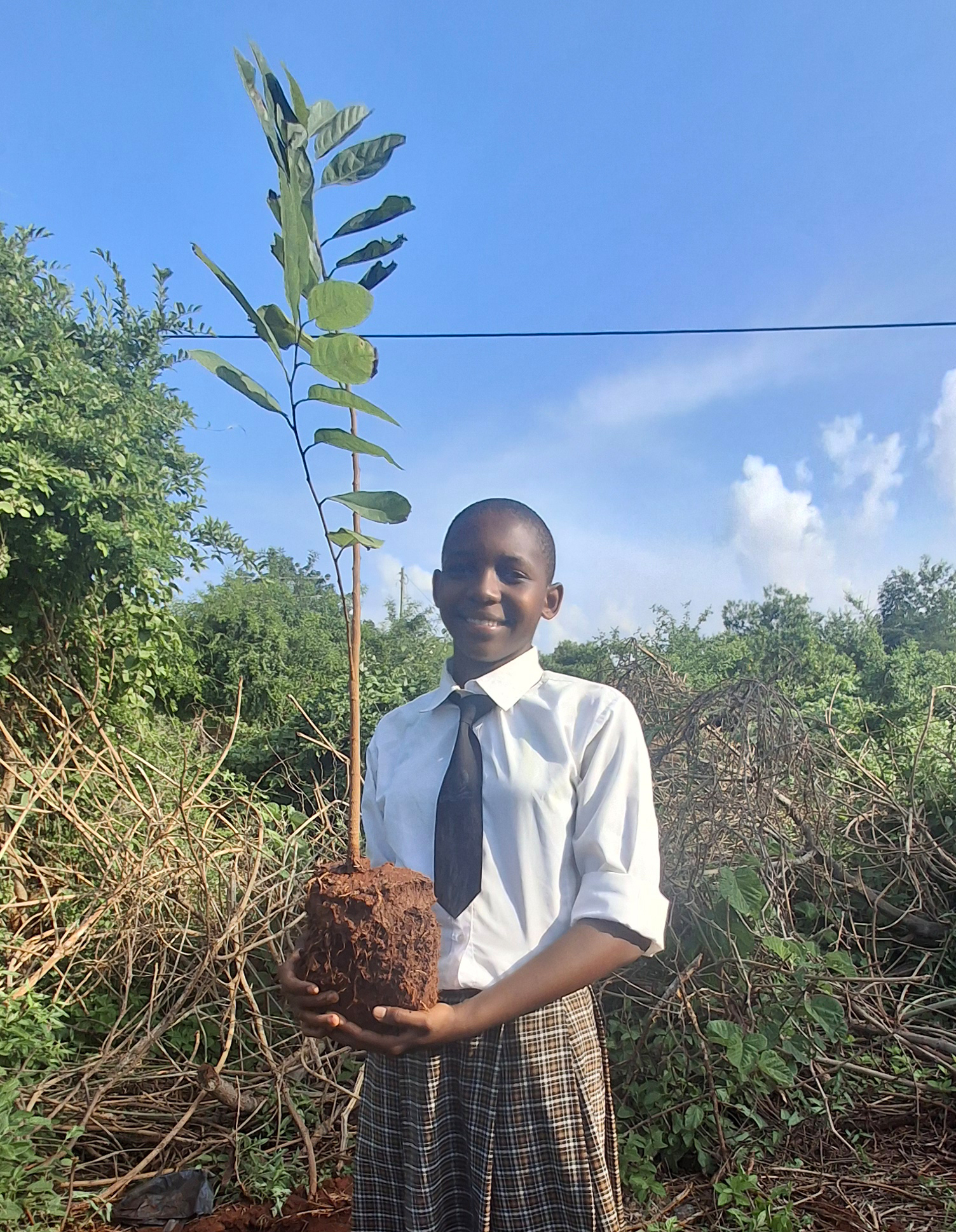
Josephine Kililo, a Wildlife Club member in Kenya.
The future of Africa’s forests depends on the next generation—and in Kenya’s Taita Taveta County, that future is already taking shape.
Josephine Kililo, a Grade 9 student and Wildlife Club member, has spent years nurturing tree seedlings and encouraging her peers to take part in conservation. What began as a school activity has grown into a shared commitment among students to protect and restore their environment.
To mark International Day of Forests, more than 600 students and teachers came together to plant trees—demonstrating the power of collective action and youth leadership.
Through AWF’s Young Conservation Heroes program, implemented in partnership with Wildlife Clubs of Kenya, students gain hands-on experience and practical conservation knowledge. They are not only learning about the environment—they are actively shaping it.
Investing in young people like Josephine is an investment in long-term impact, ensuring that conservation efforts continue to grow and evolve for generations to come.
Forests as Engines of Livelihoods and Resilience in Rwanda
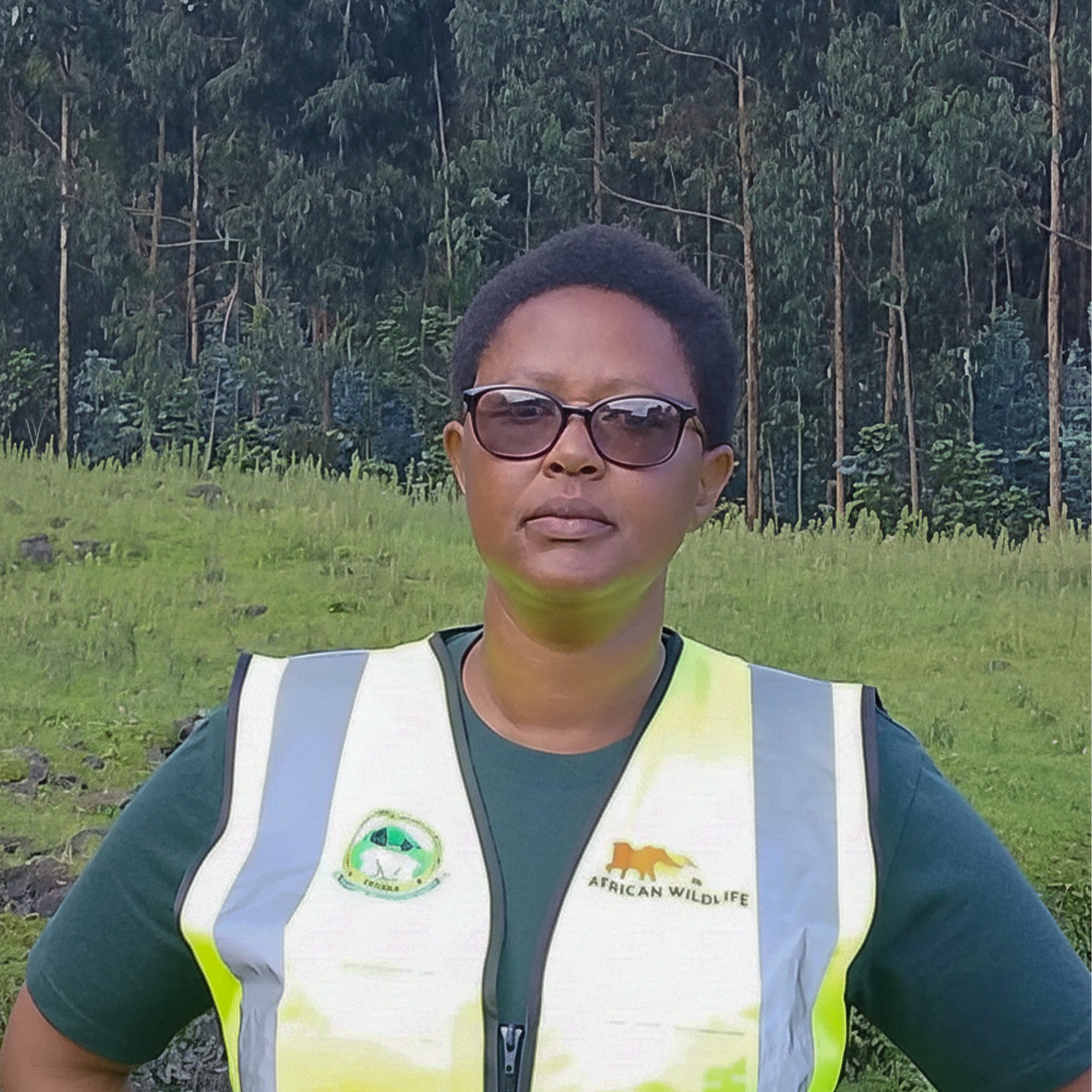
Karigirwa Lucien, a youth volunteer in Kinigi, Musanze District, Rwanda.
In Rwanda, forests are central to both environmental sustainability and economic growth. Nowhere is this more evident than around Volcanoes National Park, where conservation and livelihoods are deeply interconnected.
For youth volunteer Karigirwa Lucie, forests represent opportunity. The park’s global appeal—driven by its population of mountain gorillas—supports a thriving tourism sector that benefits surrounding communities through jobs, small businesses, and local enterprises.
Through AWF-supported initiatives, young people are gaining skills in conservation, climate resilience, and sustainable resource management. These programs are opening pathways to employment while strengthening community stewardship of natural resources.
At the same time, community eco-guards like Olivier Ndagijimana play a critical role in protecting forests from threats such as illegal logging—highlighting the importance of vigilance and local leadership.
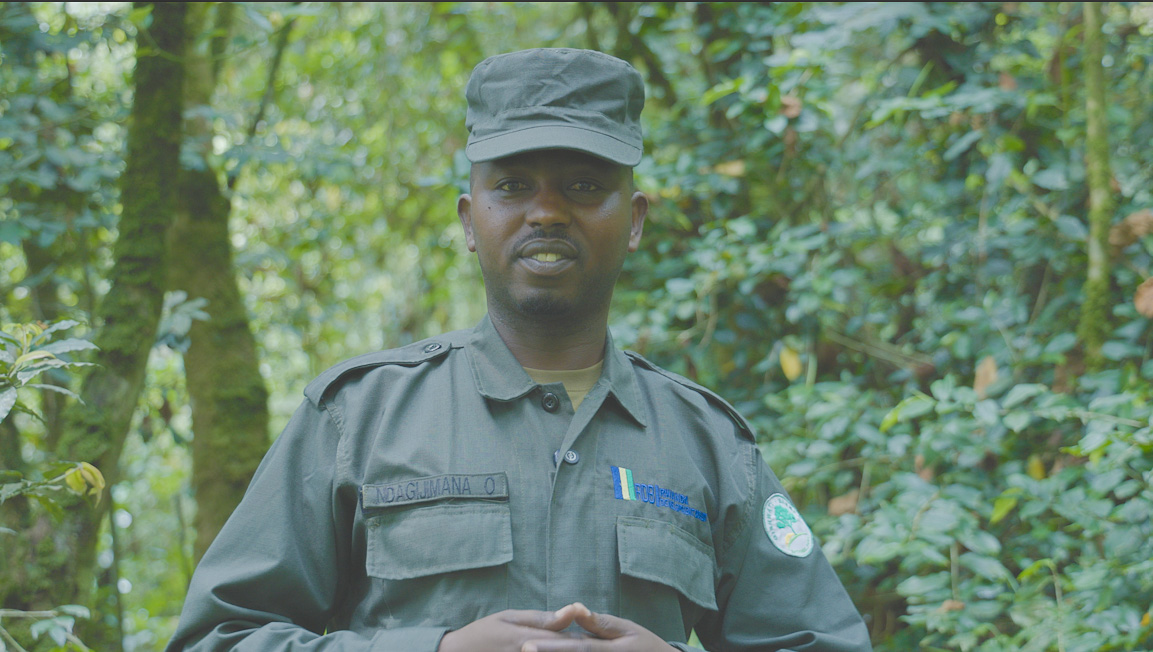
Olivier Ndagijimana, a Community eco-guard.
Rwanda’s broader commitment to restoration and protected area expansion demonstrates how conservation can drive inclusive development—balancing ecological protection with tangible benefits for communities.
Across these landscapes, one message stands out: forests are not only ecosystems to protect—they are foundations for livelihoods, resilience, and shared prosperity.
On this International Day of Forests, AWF celebrates the partners and communities making this work possible. Their leadership and commitment are restoring landscapes, strengthening economies, and securing a more sustainable future for Africa.